You've tried the moisturizer. You've added the serum. You've been consistent with your routine. And yet your skin still feels tight, looks dull, or flares up at the slightest thing.
If that sounds familiar, the problem probably isn't the products you're using. It's the foundation underneath all of them: your skin barrier.
When your skin barrier isn't functioning the way it should, even the most nourishing ingredients in the world can't do their jobs effectively. But the good news? A compromised barrier can be repaired, and it doesn't require an overhaul of your entire routine.
Here's everything you need to know.
What Is the Skin Barrier, Exactly?
Your skin barrier, also called the stratum corneum, is the outermost layer of your skin. Think of it as a brick wall: skin cells are the bricks, and a blend of natural fats (ceramides, cholesterol, and fatty acids) acts as the mortar holding everything together.
This layer has two critical jobs:
- Keep moisture locked inside your skin
- Keep environmental aggressors, irritants, and bacteria out
When the barrier is healthy and intact, skin looks plump, feels comfortable, and stays balanced. When it's weakened, tiny gaps form in that protective "mortar," allowing moisture to escape and irritants to sneak in. That's when the trouble starts.
Signs Your Skin Barrier Is Damaged
A compromised skin barrier doesn't always announce itself dramatically. Sometimes it shows up as subtle, frustrating symptoms that are easy to mistake for other issues. Watch for these signs:
- Persistent dryness or flakiness, even after moisturizing
- A tight, uncomfortable feeling, especially after cleansing
- Redness, blotchiness, or uneven skin tone that seems to come and go
- Stinging or burning when you apply products that never bothered you before
- Skin that looks dull or "tired", no matter how much sleep you get
- Breakouts or clogged pores, often triggered by a weakened barrier that allows bacteria in
- Increased sensitivity to products, weather, or temperature changes
If you're nodding along to several of these, your barrier deserves some focused attention.
What Damages the Skin Barrier?
Barrier damage rarely happens overnight. Most of the time, it builds up gradually from habits and environmental factors we don't think twice about:
- Over-exfoliation is one of the most common culprits. AHAs, BHAs, physical scrubs, and retinoids all require a healthy barrier to work well. When used too frequently or in too-high concentrations, they can strip the skin faster than it can recover.
- Harsh cleansers that leave your skin feeling "squeaky clean" are often stripping essential oils and disrupting your skin's natural pH in the process.
- Synthetic fragrance is a known sensitizer that can trigger barrier inflammation, especially in already-reactive skin. This is one of the many reasons all withSimplicity products are formulated without synthetic fragrance.
- Environmental stress, including pollution, UV exposure, cold wind, and dry indoor air, chips away at barrier integrity over time.
- Stress and poor sleep affect cortisol levels, which in turn affects your skin's ability to regenerate and maintain its protective function.
- Over-doing active ingredients like vitamin C, retinol, and exfoliating acids all at once can overwhelm skin that's already struggling.
The Ingredients That Actually Repair a Damaged Skin Barrier
This is where it gets interesting. Not every "hydrating" ingredient actually repairs the barrier. True barrier repair requires specific nutrients that either rebuild the protective lipid layer or support the skin's own healing process.
Here's what to look for:
Niacinamide (Vitamin B3)
Niacinamide is arguably the most versatile barrier-supporting ingredient available. It works by stimulating ceramide production, which is the skin's own natural mortar. It also reduces redness, minimizes the appearance of pores, and calms inflammation. Research consistently shows it helps reinforce barrier function with regular use.
Hyaluronic Acid
Hyaluronic Acid is a humectant, meaning it draws water into the skin and holds it there. A well-hydrated barrier is a more resilient barrier. Look for formulas that include multiple molecular weights of hyaluronic acid for hydration at different skin depths.
Vitamin C
Vitamin C provides antioxidant protection against the environmental stressors (UV, pollution) that contribute to barrier breakdown in the first place. It also brightens uneven tone caused by past damage.
Vitamin A
Vitamin A supports cell turnover, which helps the skin shed and replace damaged barrier cells more efficiently.
Vitamins E and K
Vitamins E & K work together to reinforce the barrier's protective function and reduce inflammation.
Plant peptides
These are are amino acid chains that signal the skin to produce more of its own structural proteins, supporting long-term barrier resilience rather than just temporary hydration.
Probiotics and prebiotics
Both prebiotics and probiotics are an emerging area of barrier science. A healthy skin microbiome (the ecosystem of beneficial bacteria on your skin) is closely linked to a healthy barrier. Supporting that microbiome helps your skin maintain its own defenses.
How to Use a Barrier Serum Correctly
Even the best barrier serum won't perform well if it's applied incorrectly. A few things to keep in mind:
- Apply to damp skin. Humectants like hyaluronic acid work by drawing water from their environment. If your skin is completely dry when you apply them, they have less to work with. Pat your face dry lightly after cleansing, leaving a little moisture behind, and apply your toner first. The toner will act as a "vehicle" to pull moisture from the serum into the skin.
- Layer thinnest to thickest. A water-based serum like a vitamin water serum goes on before heavier moisturizers or facial oils. This order ensures actives can absorb without being blocked by richer formulas.
- Give it time. Barrier repair isn't instant. Most people start to notice a difference in skin comfort and resilience within two to four weeks of consistent use. Stick with it.
- Simplify while you heal. If your barrier is significantly compromised, consider stepping back from exfoliating acids and retinoids for a few weeks. Let your skin stabilize before reintroducing actives.
Why Clean Formulation Matters for Barrier Health
Here's something that often gets overlooked: some of the most common skincare ingredients can actually work against your barrier while you're trying to repair it.
Synthetic fragrance is the biggest offender. It's one of the most frequent triggers of contact dermatitis and barrier-disrupting inflammation, and it hides in countless products, even ones marketed as "gentle" or "calming."
Harsh preservatives, alcohol-based ingredients, and certain surfactants can also compromise barrier integrity over time, especially for sensitive or reactive skin types.
This is why fragrance-free, toxin-free formulation isn't just a wellness trend. For anyone actively working to repair or protect their skin barrier, it's a practical necessity.
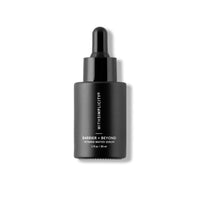
Meet the Barrier + Beyond Vitamin Water Serum
Our Barrier + Beyond Vitamin Water Serum was built around exactly this kind of science-informed, skin-first thinking.
It's lightweight and water-based, so it absorbs immediately without heaviness or residue. But behind that easy texture is a concentrated delivery of everything a struggling barrier actually needs:
Hyaluronic acid floods skin with immediate hydration. A full spectrum of vitamins, A, B3 (niacinamide), C, E, and K through botanicals work to nourish, brighten, and reinforce. Plant peptides support long-term barrier resilience rather than just surface-level results, and probiotics (specifically lactobacillus in the serum) help maintain the healthy skin microbiome that underlies barrier function.
Most importantly, Barrier + Beyond is formulated without synthetic fragrance, parabens, or harsh chemicals, because we believe barrier repair products shouldn't come with barrier-disrupting ingredients.
The result? Skin that feels plumper, calmer, and more balanced... and a barrier that's equipped to stay that way.
The Bottom Line
Your skin barrier is the foundation of every other skincare result you're trying to achieve. Brightening, anti-aging, acne control, hydration: all of it works better when your barrier is intact and functioning.
If your skin has been feeling reactive, dull, or just "off," it may be time to simplify your routine, reach for barrier-supportive ingredients, and give your skin the nutrient-rich support it needs to reset.
Your skin is doing its best. Give it the tools to do the rest.
Shop the Barrier + Beyond Vitamin Water Serum
All withSimplicity products are formulated without synthetic fragrance, parabens, phthalates, or harsh chemicals, so your skin gets what it needs without what it doesn't.