You've made the decision to go non-toxic with your makeup. You've done the research, you care about what goes on your skin, and you're ready to make the switch.
But then you pick up a foundation that says "clean" on the front, flip it over, and stare at an ingredient list you can't begin to decode.
Sound familiar? You're not alone. The foundation category is one of the most confusing places to shop in the clean beauty world, because the word "clean" isn't regulated. Anyone can put it on a label. That means the work of figuring out what's actually in your foundation still falls on you.
This blog post is here to make that easier. Here's exactly what to look for, what to avoid, and what a genuinely non-toxic liquid foundation should look like.
Why Foundation Deserves Extra Scrutiny
Of all the makeup products on your face, foundation has the most contact with your skin. It covers the largest surface area, it's worn for the most hours, and it's applied daily. That means whatever is in your formula, your skin is absorbing it in meaningful amounts over time.
Conventional liquid foundations can contain a surprising number of ingredients that are linked to skin irritation, hormone disruption, and long-term health concerns. Most people don't realize this because the labels are long, the ingredient names are technical, and marketing terms like "dermatologist-tested" or "hypoallergenic" create a false sense of security.
Going non-toxic with your foundation is worth the effort. Here's where to start.
Ingredients to Avoid in Conventional Foundation
These are the most common offenders found in mainstream liquid foundations.
- Parabens (methylparaben, propylparaben, butylparaben) Parabens are synthetic preservatives used to extend a product's shelf life. Research has raised concerns about their ability to mimic estrogen in the body, which can interfere with hormonal function. Many clean beauty shoppers cite parabens as the first ingredient they look to eliminate, and for good reason. A non-toxic foundation should be formulated without them.
- Fragrance "Fragrance" or "parfum" on an ingredient label is a catch-all term that can represent a blend of dozens of undisclosed synthetic chemicals. Fragrance is one of the most common triggers of contact dermatitis and skin sensitization, and its presence in a foundation is one of the clearest signs that the formula isn't truly clean. Even foundations that don't smell particularly strong can contain fragrance compounds. Look specifically for "fragrance-free," not just "unscented."
- Silicones (dimethicone, cyclopentasiloxane) Silicones give conventional foundations that smooth, blurring effect on application. They're not inherently toxic, but they create a film over the skin that can trap oil, bacteria, and dead skin cells, particularly for acne-prone skin types. If you've ever noticed that a foundation looks great for the first hour and then starts to feel heavy or congested, silicones are often why. Many clean beauty shoppers choose to avoid them, especially for daily wear.
- Synthetic dyes (FD&C and D&C colorants) Conventional foundations are often tinted with synthetic petroleum-derived dyes. Some of these have been linked to skin irritation and sensitivity. Non-toxic foundations use iron oxides and other mineral pigments to achieve their color range instead.
- PEGs (polyethylene glycols) PEGs are used as emulsifiers and thickeners in cosmetics. They're derived from petroleum, and their manufacturing process can leave behind trace contaminants. They also enhance skin penetration, which sounds helpful but means they can drive other ingredients deeper into the skin, including any problematic ones in the formula.
- Formaldehyde-releasing preservatives (DMDM hydantoin, imidazolidinyl urea) These preservatives slowly release formaldehyde over time to prevent microbial growth. Formaldehyde is a known carcinogen and a common cause of allergic skin reactions. They're less commonly found in modern formulas but still appear in drugstore foundations.
- Talc Talc is used as a filler in many powder and liquid formulas to improve texture and coverage. The concern is that talc deposits can sometimes be contaminated with asbestos, a carcinogen, depending on the source and testing protocols. Many clean beauty brands have moved away from talc entirely.
What "Non-Toxic" Actually Means
Here's where it's worth pausing to be honest: "non-toxic," "natural," and "clean" are all unregulated marketing terms. The FDA does not require cosmetic brands to meet a specific standard before using any of them.
What that means in practice is that the only way to know whether a foundation is truly non-toxic is to look at the ingredient list, not the front of the bottle.
A genuinely non-toxic foundation is one that has been intentionally formulated without the categories of ingredients above. The most credible brands are transparent about exactly what they've left out, using clear "free-from" language: without parabens, without synthetic fragrance, without synthetic dyes, without harsh chemicals.
That's the framing that actually tells you something. Broad claims like "clean," "green," or "natural" standing alone don't.
What a Non-Toxic Foundation Should Contain
Once you've confirmed what isn't in a foundation, the next question is what is. Here's what high-quality, non-toxic liquid foundations are typically built from.
- Mineral pigments (iron oxides) These are the colorants used in place of synthetic dyes to create foundation shades. Iron oxides are naturally occurring minerals that have been used safely in cosmetics for decades. They provide consistent, buildable color without the sensitization risk of petroleum-derived dyes.
- Plant-based emollients and humectants Non-toxic foundations rely on ingredients like aloe vera, jojoba oil, squalane, and glycerin to create slip, blendability, and hydration, doing the job that silicones do in conventional formulas but without the pore-clogging effect.
- Natural or organic thickeners Ingredients like xanthan gum, cellulose, and vegetable waxes give non-toxic foundations their texture and consistency without synthetic polymers.
- Skin-supporting actives The best non-toxic foundations go further than just clean: they include ingredients that actively benefit the skin during wear, things like antioxidants, vitamins, and plant extracts that nourish rather than just coat.
The Other Thing Worth Checking: Shade Range
One of the longstanding criticisms of clean and natural foundation has been a limited shade range, particularly for medium to deep skin tones. This is a real issue that many indie clean brands haven't fully solved.
When evaluating a non-toxic foundation, the shade range is worth checking as carefully as the ingredient list. A brand committed to inclusive, non-toxic beauty should offer enough shades to match a meaningful range of skin tones, not just a handful of light to medium options.
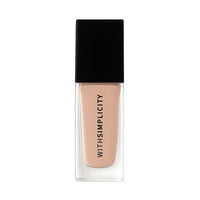
What This Looks Like in Practice: Our Organic Liquid Foundation
At withSimplicity, we formulated our Liquid Foundation around exactly these principles.
The formula is free from synthetic fragrance, parabens, synthetic dyes, and harsh chemicals. The coverage is buildable, which means you control how much your skin shows through, and the finish is natural and skin-like, not plastic or cakey. And it comes in 16 shades, with samples available so you can find your match before committing to a full-size bottle.
The ingredient list is rooted in clean, plant-based ingredients that do double duty: they cover and even the skin while supporting it throughout the day, rather than sitting on top of it.
It's the foundation we'd want to use ourselves, which is exactly why we made it.
One More Step: What Goes Under Your Foundation Matters Too
Even the cleanest foundation performs better when the skin underneath is balanced, hydrated, and supported. If you're building a non-toxic routine from the ground up, the step before your foundation is just as important as the foundation itself.
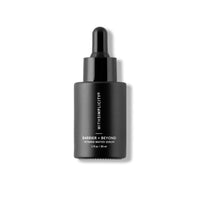
Our Barrier + Beyond Vitamin Water Serum preps skin with a lightweight layer of hydration and vitamins that helps foundation sit more evenly, last longer, and look more natural throughout the day. It's fragrance-free and formulated with the same clean standards as everything else we make.
Clean makeup works best on clean, well-cared-for skin. That's the whole philosophy.
The Bottom Line
A truly non-toxic foundation:
- Is free from parabens, synthetic fragrance, synthetic dyes, PEGs, silicones, and formaldehyde-releasing preservatives
- Uses mineral pigments (iron oxides) for color rather than petroleum-derived dyes
- Is transparent about its ingredient list and uses specific "free-from" language rather than vague marketing claims
- Contains plant-based ingredients that support the skin, not just cover it
- Offers a meaningful shade range with samples available for matching
You deserve makeup that works for you — and doesn't work against you. That's what non-toxic actually means.
withSimplicity is a clean, toxin-free, fragrance-free, and cruelty-free skincare and makeup brand based in Harrisonburg, Virginia. All products are formulated without synthetic fragrance, parabens, phthalates, or harsh chemicals.